
- ustrasser@ucsd.edu
-
9500 Gilman Dr
Department of History
Mail Code: 0104
La Jolla , California 92093
 |
 |
|
Available in print and through open access. Winner 2021 SSEMWG Book Award
|
(Published with Frank Biess; for contents and download version of introduction see Berghoff Explorations) |
Ulrike Strasser is Professor of History at the University of California San Diego. Her scholarship explores how religion, gender, mobility, and knowledge shaped the making of the early modern world. Working across European and global history, she investigates how people, ideas, and practices came into relation with one another and how these relationships generated new forms of knowledge, social connection, political power, and cultural imagination.
Before joining UC San Diego, she taught at the University of California, Irvine, and held the Clark Professorship at UCLA.
Books:
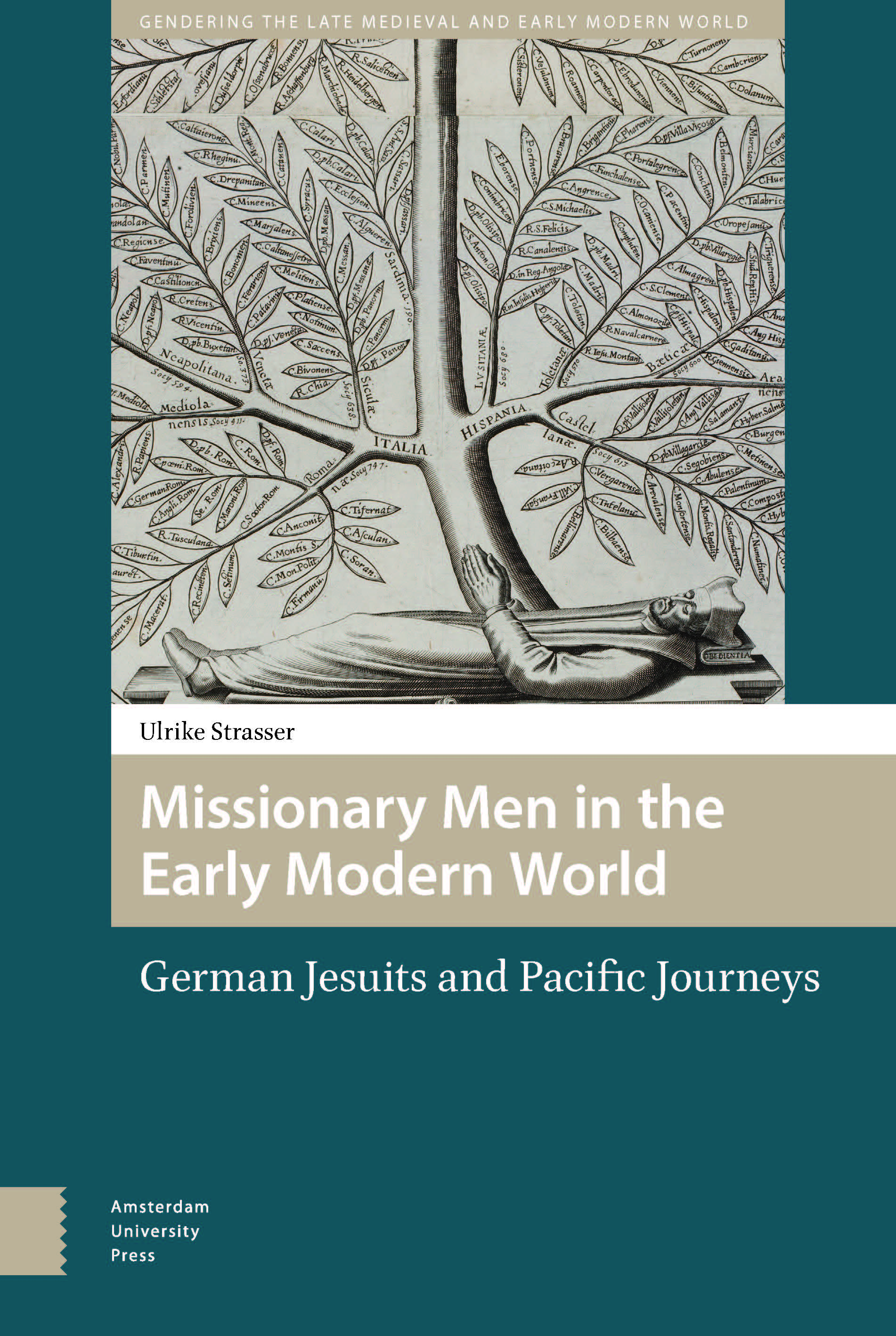
Strasser is the author of the award-winning monographs State of Virginity: Gender, Politics, and Religion in a Catholic State (University of Michigan Press, 2004 and 2007 in paper), recipient of the 2005 Book Award, Society for the Study of Early Modern Women, and Missionary Men in the Early Modern World: German Jesuits and Pacific Journeys (Amsterdam University Press, 2020 and 2025 in paper; available in open access), recipient of the 2021 Society for the Study of Early Modern Women and Gender Book Award.
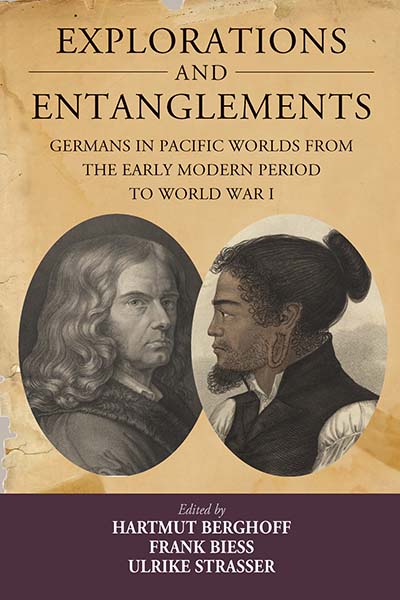
Strasser co-edited Gender, Kinship and Power (Routledge, 1998) with MJ Maynes, Ann Waltner, and Birgitte Soland; Cultures of Communication, Theologies of Media (University of Toronto Press, 2017) with Helmut Puff and Christopher Wild; Explorations and Entanglements: Germans in Pacific Worlds from the Early Modern Period to World War I (Berghahn Books, 2018 and paper 2024;) with Hartmut Berghoff and Frank Biess; Mission, Gender, and Emotion in Transconfessional Perspective (Harrassowitz Verlag, 2027) with Ulrike Gleixner.
Forthcoming:
Strasser's forthcoming book, Unexpected Proximities: Enlightenments, Jesuits, and Indigenous Worlds, co-authored with Renate Dürr (University of Tübingen), will be published by Oxford University Press in 2027.
The book offers a new interpretation of the Enlightenment by demonstrating how missionary worlds, Indigenous knowledge, and the history of emotions shaped European science and intellectual life. Drawing on the concept of Critical Proximities, it develops a methodological framework for historical research while reinterpreting the Enlightenment as a product of global relationships that transformed Europe itself.

Strasser has received fellowships and awards from the Alexander von Humboldt Foundation, the Harvard Divinity School, the German Academic Exchange Service (DAAD), the Herzog August Bibliothek, and the University of California Humanities Research Institute, among others.
She is currently serving her second term on the interdisciplinary Committee of Experts for Germany's Excellence Strategy, the country's flagship program for research funding and institutional excellence. In this role, she evaluates major research proposals from universities across Germany and contributes to national research policy.